

On October 29, 2026, Yurii Klots, Head of the Cybersecurity Department at Khmelnytskyi National University, and Nataliia Petliak, an Associate Professor in the same department, participated in an online webinar titled "Cyber Academy Hub: New Opportunities for Learning and Professional Development in the Field of Cybersecurity." The event was organized by the Scientific Cybersecurity Association of Ukraine (SCSA-UA) with the involvement of international partners. The primary objective of the meeting was to present the capabilities of the Cyberium Academy educational platform and to discuss the prospects for utilizing modern digital tools in the training of cybersecurity specialists.
At the beginning of the webinar, Roman Odarchenko—Doctor of Technical Sciences, Professor, and Executive Director of the Scientific Association of Cybersecurity of Ukraine—addressed the participants. He presented the Association’s activities, its primary objectives, and the directions for developing scientific, educational, and international cooperation in the field of cybersecurity.

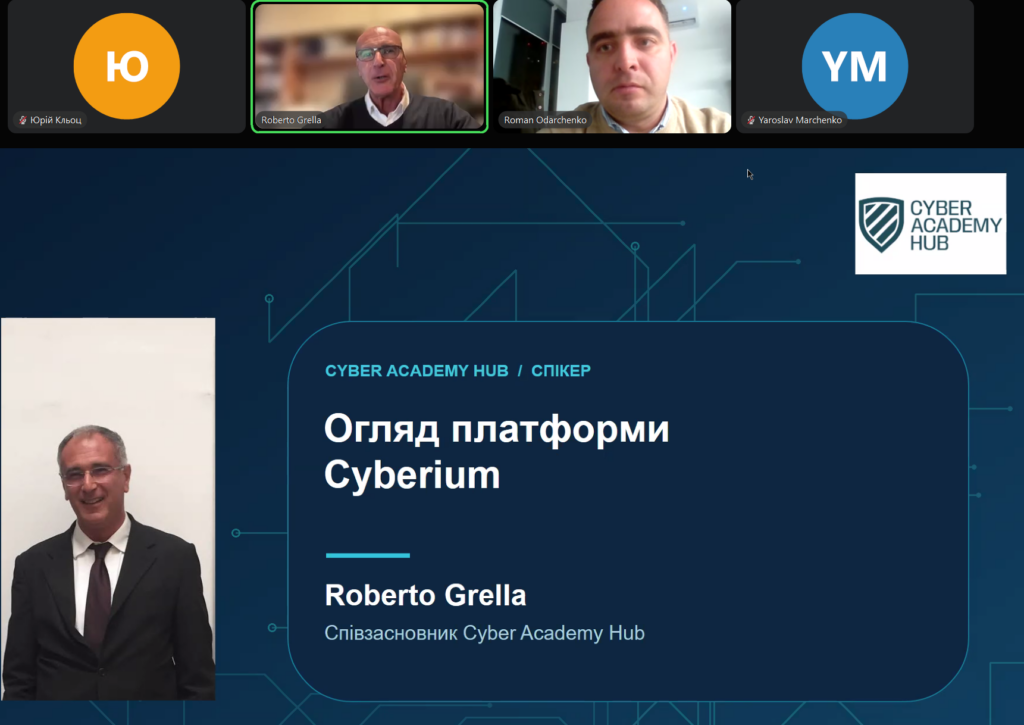
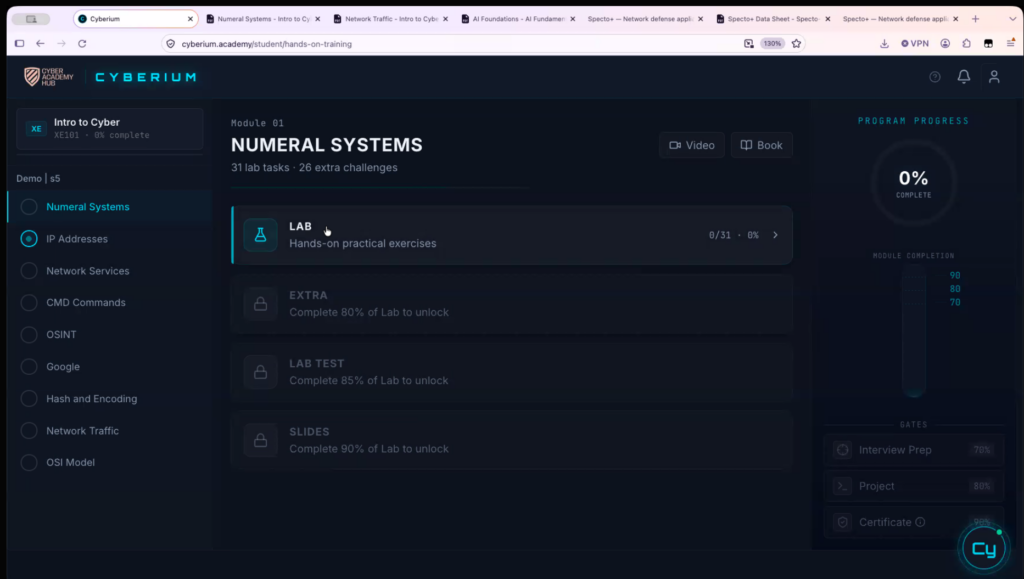
Roberto Grella, Head of the Cyber Academy Hub project and co-founder of this educational initiative, presented the capabilities of the Cyber Academy Hub and the Cyberium learning platform. During his presentation, he demonstrated the platform's structure, the features of the training programs, the organization of practical sessions, and the potential for utilizing the interactive learning environment.
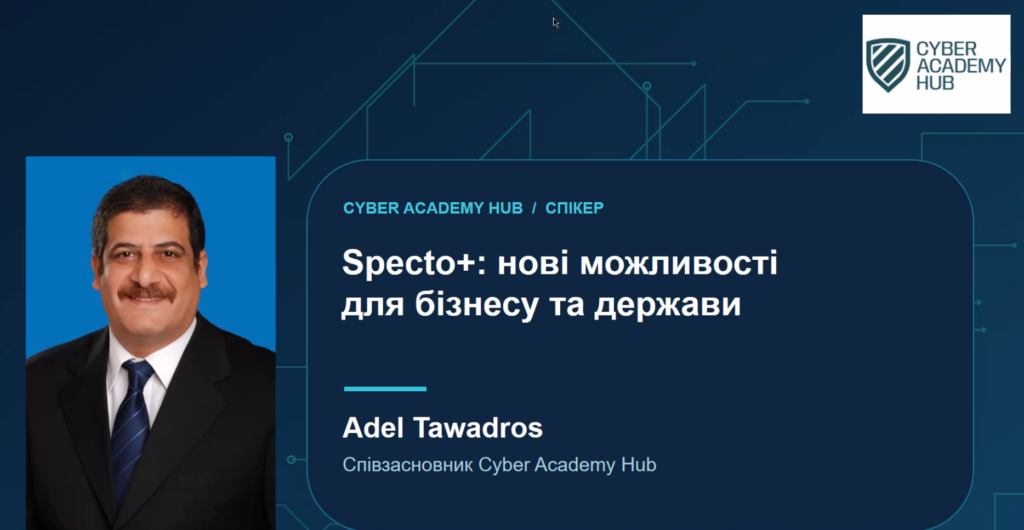
A presentation by Adel Tawadros, co-founder of Cyber Academy Hub, drew particular attention; it focused on Specto, a specialized tool for researching cyber threats. Specto enables the analysis of data regarding actual attacks and cyber incidents captured via the decoy infrastructure of the company ThinkCyber. This approach allows for the study of current methods, tools, and actions employed by threat actors, and facilitates the use of this information to develop training scenarios that closely mirror real-world conditions.
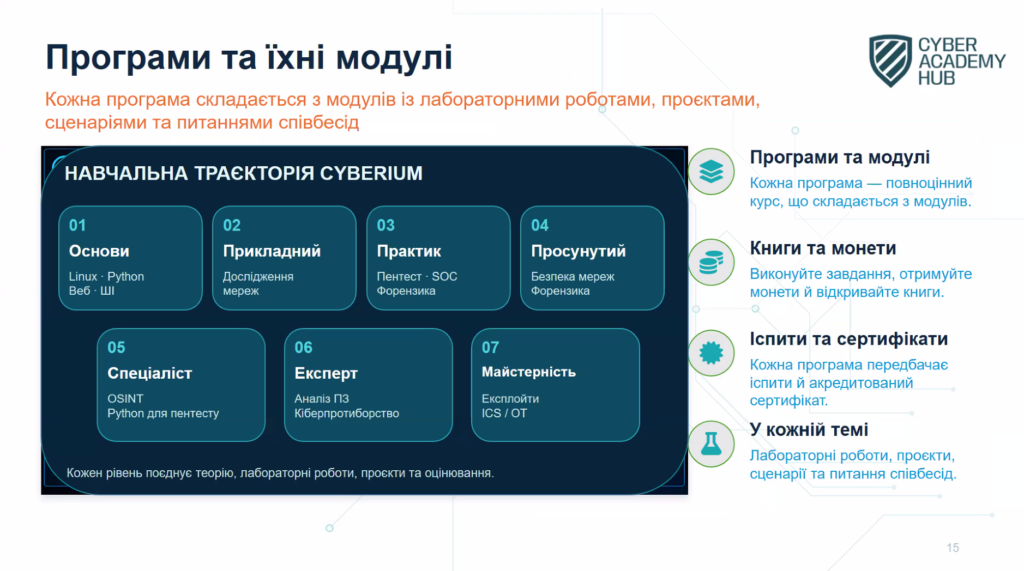
One of the key features of this platform is a sequential, seven-level training system designed for both beginners and users with advanced knowledge and practical experience in the field of cybersecurity. The learning path covers four main tracks: XE (Fundamentals), NX (Defense), ZX (Offensive Technologies), and CX (Industrial and Operational Security). Depending on their proficiency level, learners can master cybersecurity fundamentals, computer networks, Linux, Python, web technologies, and artificial intelligence, subsequently progressing to network exploration, penetration testing, SOC analysis, digital forensics, malware analysis, OSINT, and the development of security testing tools. Advanced levels include the study of Active Directory security, network forensics, vulnerability analysis, exploit development, as well as the protection of Industrial Control Systems (ICS) and Operational Technology (OT).
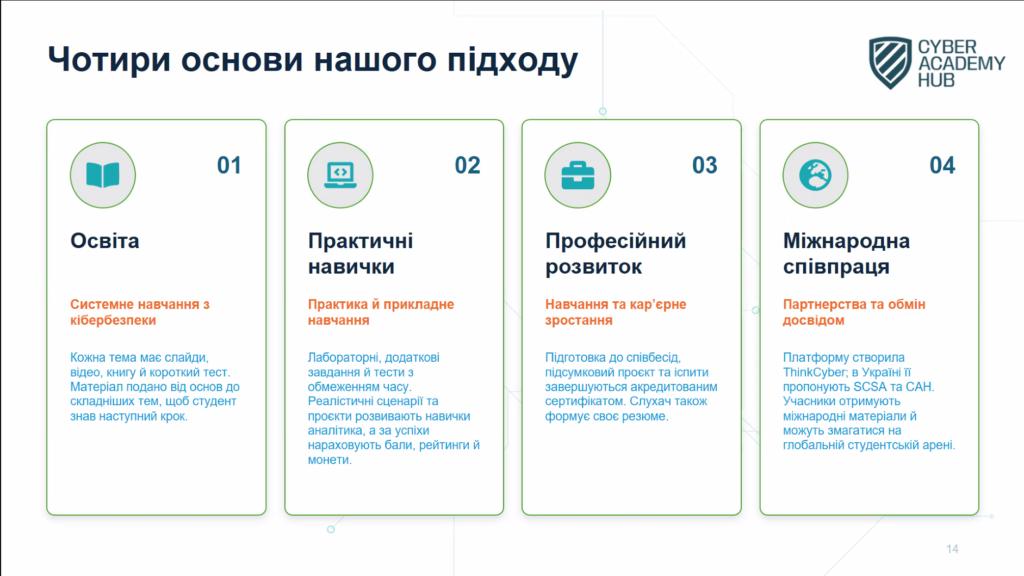
A key advantage of Cyberium is its combination of theoretical training and practical work. The training programs include video content, digital learning materials, laboratory exercises, practical scenarios, projects, assessments, and tests. The platform features progress tracking, an evaluation system, preparation for professional job interviews, and the issuance of certificates upon the successful completion of specific programs. Training is organized on a self-paced basis, allowing users to set their own pace and progress gradually from foundational knowledge to specialized professional competencies.
Participation in the event provided an opportunity to explore international practices in organizing practice-oriented learning, modern tools for developing cybersecurity competencies, and new possibilities within the digital educational environment. The solutions presented are of practical interest for university education—specifically regarding the enhancement of academic courses through laboratory work, interactive scenarios, and tasks that closely mirror real-world professional situations.
Exploring the capabilities of Cyber Academy Hub opens up prospects for further discussion on international educational cooperation and the use of modern learning resources in the training of students specializing in "Cybersecurity and Information Protection."